
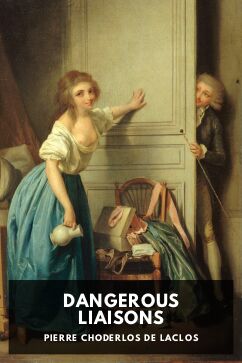
Dangerous Liaisons - Pierre Choderlos de Laclos
First published in 1782, Dangerous Liaisons is told entirely through letters. This format pulls you right into the secret thoughts and schemes of its characters, making you feel like you're reading something you absolutely shouldn't.
The Story
It’s a battle of wits between two experts. The Marquise de Merteuil and the Vicomte de Valmont are aristocrats with too much time and too little conscience. They’re former lovers who now collaborate on social sabotage, sharing their conquests and failures through letters. Their latest project is a cruel wager: Valmont must seduce the devout and married Madame de Tourvel. If he succeeds, he wins a night with Merteuil herself. But what starts as a clever game gets complicated. Valmont finds himself unexpectedly moved by his target, and Merteuil watches his potential change of heart with a jealous, calculating eye. Their alliance cracks, and the game turns into a war with no rules and devastating consequences for everyone around them.
Why You Should Read It
This book is a masterclass in character. Merteuil and Valmont are horrible, fascinating people. Laclos doesn’t ask you to like them, but he makes you understand their brilliant, twisted logic. You watch them build intricate traps with words, and part of the thrill is waiting for the moment their own cleverness backfires. Beyond the scandal, it’s a shockingly modern look at power, gender, and the masks people wear. Merteuil, in particular, is a compelling study of a woman using the only weapons society gave her—deceit and seduction—to gain control in a man’s world.
Final Verdict
If you love complex, morally gray characters and stories about manipulation that feel both timeless and tense, this is your book. It’s perfect for fans of slow-burn psychological drama, shows like Succession or Bridgerton (but with more bite), and anyone who believes the oldest stories about human nature are often the most relevant. Just be prepared—these characters will stick with you, and you might side-eye your own social circle a little differently afterward.
Legal analysis indicates this work is in the public domain. It serves as a testament to our shared literary heritage.







Linda Flores
1 year agoCompatible with my e-reader, thanks.